
If you’re considering indoor epoxy flooring for your Wide Bay home or business, this guide covers everything you need to make the right decision: real local pricing, system comparisons, installation steps, honest downsides, and climate-specific considerations that most generic guides overlook. Written by John Carew, Operations Manager at Supreme Coatings — a QBCC-licensed contractor with six years of hands-on epoxy flooring experience across Bundaberg, Hervey Bay, Maryborough, and Gympie.
What is indoor epoxy flooring?
Indoor epoxy flooring is a seamless, polymer-based coating system applied directly over a prepared concrete slab. It consists of an epoxy resin mixed with a hardener — once combined, a chemical reaction creates an extremely hard, non-porous surface that bonds permanently to the concrete below.
Unlike tiles or vinyl, there are no joins, no grout lines, and no edges to lift or curl. The result is a continuous, smooth-to-sealed floor that handles heavy traffic, resists staining, and can last 15–25 years with minimal maintenance.
In Wide Bay Queensland, where homes deal with high summer humidity, subtropical heat, and concrete slabs that often hold residual moisture, the right epoxy system — professionally installed — is one of the most practical flooring upgrades available.
Is epoxy flooring good for inside a house?
Yes, epoxy flooring is well-suited to indoor residential use, provided the right system is chosen for each room. It’s not a one-size-fits-all product, but for the majority of indoor spaces in a Wide Bay home, epoxy performs exceptionally well.
Where it excels indoors
- Garages and workshops — the original home for epoxy; handles oil, chemicals, hot tyre marks
- Laundry rooms — resists water, detergents, and is easy to mop clean
- Open-plan living areas — increasingly popular for the seamless, polished concrete aesthetic
- Rumpus rooms, home gyms, and play areas — durable, easy to clean, and slip-resistant products can be added, with anti-slip additives tested to AS 4586:2013.
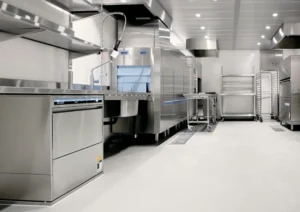
- Commercial interiors — showrooms, retail floors, workshops, warehouses.
Where to exercise caution
Bathrooms and wet areas require careful system selection and installation — standard epoxy applied over improperly waterproofed substrates can develop adhesion issues over time. For these spaces, polyurethane-topped systems with moisture-tolerant primers are more appropriate. Always consult aQBCC- licensed applicator before coating any wet area.
| Room type | Epoxy suitable? | Recommended system |
| Garage / workshop | Yes — ideal | Flake system + polyurethane topcoat |
| Laundry | Yes | Solid colour epoxy + sealer |
| Living / dining | Yes | Metallic or solid colour + UV-stable topcoat |
| Home gym / rumpus | Yes | Flake system with anti-slip additive |
| Bathroom / wet area | With correct prep | Polyurethane system over waterproofed substrate |
| Kitchen | Yes | High-build epoxy + anti-slip topcoat |
Types of indoor epoxy flooring systems
Not all epoxy floors are the same product. The system you choose depends on how the space will be used, how much foot or vehicle traffic it will see, and your aesthetic preferences. Here’s how the main options compare for Wide Bay conditions.
Standard solid colour epoxy
A two- to three-coat system in a single colour. Clean, professional, and cost-effective for garages and utility areas. UV stability can degrade in sunlit spaces without a polyurethane topcoat — important for Wide Bay homes with north-facing or highly glazed interiors.
Decorative flake (chip) system
Acrylic colour flakes are broadcast into a wet epoxy base coat, then sealed with a clear polyurethane or polyaspartic topcoat. The most popular system for residential garages across Bundaberg and Hervey Bay. The textured surface provides natural grip — important for safety, and the decorative finish conceals minor surface imperfections well.
Metallic epoxy
Pigmented metallic powders are mixed into the epoxy to create a swirling, three-dimensional visual effect. No two metallic floors are identical. Popular for living areas, showrooms, and commercial interiors wanting a high-end, designer aesthetic. More expensive than standard systems but highly durable.
Polyaspartic coatings
A fast-cure, UV-stable coating system that’s become increasingly popular as a top coat or standalone solution. Polyaspartic coatings cure faster than standard epoxy — often same-day return to service — making them ideal for commercial spaces that can’t afford extended downtime. They’re also more resistant to yellowing from UV exposure, a real consideration given Queensland’s UV index.
Polyurethane topcoats
Most professional epoxy systems in Wide Bay finish with a polyurethane topcoat rather than a straight epoxy seal. Polyurethane adds flexibility, impact resistance, and UV stability that epoxy alone doesn’t offer. It’s the layer you walk on every day , and it’s what determines how long the floor looks new.
Real costs: indoor epoxy flooring in Wide Bay Queensland
Cost is the question we hear most. Here are honest price ranges for professional installation in the Wide Bay region as of 2026. These figures include surface preparation, which accounts for the single biggest variable in any quote.
| System | Typical use | Price range (per m²) |
| Basic 2-coat epoxy | Utility garages, sheds | $40 – $50 |
| Flake system (standard) | Residential garage | $70 – $85 |
| Flake system (premium) | Garage, living areas | $100 – $125 |
| Metallic epoxy | Living areas, showrooms | $100 – $130 |
| Polyaspartic coating | Commercial, fast-cure | $65 – $100 |
| Surface prep add-on | Diamond grinding | $8 – $25 |
| Crack / moisture repair | Per repair, varies | $50 – $200+ |
A standard double garage (approximately 36–40m²) with a flake system, diamond-ground preparation, and polyurethane topcoat typically falls between $2,800 and $4,000 installed. Get a site-specific quote — Wide Bay’s older housing stock often has slabs with moisture issues that affect the final price.
Is epoxy flooring expensive?
Relative to other permanent flooring options, epoxy is mid-range on upfront cost and very competitive over its lifespan. Tile installation in Queensland runs $100–$150/m² or more, and requires ongoing grout maintenance. Polished concrete runs $80–$120/m². Quality carpet is $40–$80/m² installed but needs replacement every 8–12 years.
A professionally installed epoxy floor, maintained properly, can last 15–25 years with no replacement cost — making the per-year cost one of the lowest of any flooring option.
The trap is cheap installation. DIY epoxy kits from hardware stores use thin, water-based coatings that peel within 2–3 years. Bargain installers who skip diamond grinding and moisture testing produce floors that fail in 12–18 months. The cost of removing and redoing a failed epoxy floor often exceeds the original installation price.
Can mould grow under an epoxy floor?
This is one of the most important questions for Wide Bay homeowners, and the honest answer is: yes, under specific conditions — but a correctly installed epoxy system significantly reduces that risk rather than creating it.
Mould requires three things: moisture, organic material, and the right temperature. Concrete itself is not organic, so mould on or under a concrete slab is less common than in subfloor timber structures. However, if a slab has an ongoing moisture issue — rising damp, a broken drainage line, or inadequate ground vapour barrier — and epoxy is applied over it without addressing those issues first, moisture can become trapped between the slab surface and the coating. In Queensland’s warm climate, that trapped moisture can become a environment for mould growth over time.
The solution is not to avoid epoxy — it’s to ensure proper diagnosis and treatment before coating. This means:
- Moisture testing the slab before any coating is applied
- Identifying and fixing the source of any moisture ingress (drainage, DPC, vapour barriers)
- Using a moisture-tolerant or moisture-vapour-transmission (MVT) primer where required
- Ensuring adequate ventilation in enclosed spaces like garages
A correctly installed epoxy floor with a proper primer actually creates a sealed, non-porous surface that makes the slab easier to keep clean and dry — reducing mould risk compared to bare or painted concrete. The risk comes from shortcuts, not from epoxy itself.
Installation process: what professional epoxy flooring looks like in Wide Bay
The difference between an epoxy floor that lasts 20 years and one that fails in 18 months is almost entirely in the preparation stage. Here’s what a proper installation looks like from start to finish.
Initial slab assessment
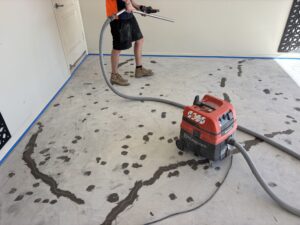
The installer inspects for cracks, contamination, existing coatings, oil penetration, and takes moisture readings. Moisture content above 75% RH or a calcium chloride test exceeding 3kg/m²/24h requires a specialist primer or moisture remediation before proceeding.
Diamond grinding to CSP 3–4
Industrial diamond grinders open the concrete surface to a Concrete Surface Profile (CSP) of 3–4 — roughly the texture of medium sandpaper. This removes laitance, old paint, contamination, and creates a mechanical key for the epoxy to bond into. Acid washing is not an adequate substitute for grinding on most residential slabs.
Crack repair and patching
Structural and cosmetic cracks are filled with semi-flexible polyurethane or epoxy filler. Attempting to coat over unrepaired cracks will result in those cracks reflecting through the finished surface within months.
Primer application
A penetrating primer coat is applied, typically via roller, to seal the concrete and provide a chemical bond for the body coat. Moisture-tolerant primers are specified where the slab showed elevated moisture in testing.
BODY coat(s)
The epoxy base coat is applied. On flake systems, decorative chips are broadcast into the wet coat to the desired coverage level before the coat tacks off. On solid or metallic systems, the body coat is worked in smooth layers.
Topcoat sealing
A clear polyurethane or polyaspartic topcoat is applied to protect the colour layer, provide UV stability, and deliver the final surface properties (gloss level, anti-slip texture). Most Wide Bay residential jobs include two topcoat layers for longevity.
Cure time
Standard epoxy systems require 24–48 hours of light foot traffic, 3–7 days of vehicle traffic, or heavy loads. Polyaspartic systems can accept foot traffic in as little as 24hours. Full chemical cure takes 7–14 days depending on temperature and humidity.
Wide Bay climate note: Bureau of Meteorology climate data shows summer humidity in the Wide Bay region regularly exceeds 80–85%. Application should be scheduled during lower-humidity periods where possible, and installers should check ambient dew point before coating. Applying epoxy when the substrate is within 3°C of the dew point risks surface blushing and adhesion failure.
Frequently asked questions
Is epoxy good for inside a house?
Yes. Epoxy flooring is an excellent choice for most indoor spaces — garages, laundries, living areas, home gyms, and commercial interiors. It provides a seamless, non-porous surface that resists stains, moisture, and heavy traffic, and is far easier to maintain than tiled or timber floors.
The key is choosing the right system for each space (for example, selecting UV-stable topcoats for sunlit areas) and ensuring the concrete slab is properly prepared and tested for moisture before installation. In Wide Bay Queensland’s subtropical climate, where humidity and moisture can be significant factors, professional installation with correct moisture management makes epoxy one of the most durable indoor flooring options available.
What is the downside of epoxy flooring?
The main downsides of epoxy flooring are: (1) Hardness — it has no give underfoot, which can cause fatigue in standing-heavy environments; (2) Slipperiness when wet if a smooth finish is chosen without anti-slip additives; (3) Moisture sensitivity during installation — applying epoxy over a damp slab without proper primers leads to delamination and peeling; (4) Difficulty of removal once bonded — a well-adhered epoxy floor requires industrial grinding to remove; (5) Aesthetic limitations — it suits contemporary, minimal interiors better than traditional or soft-furnishing-heavy spaces. None of these are deal-breakers for most situations, but they’re worth knowing before you commit.
Can mould grow under an epoxy floor?
Yes, under certain conditions — but this is a risk of improper installation, not of epoxy itself. Mould requires moisture, warmth, and organic material. If a concrete slab has an active
moisture issue (rising damp, a leaking pipe, inadequate vapour barrier) and epoxy is applied over it without addressing the source, moisture can become trapped beneath the coating. In Queensland’s warm climate, this creates conditions where mould can form at the slab-coating interface over time.
The solution is professional moisture testing before installation, fixing any moisture source, using a vapour-transmission primer where needed, and ensuring adequate ventilation in enclosed spaces. A correctly installed epoxy system actually makes a slab easier to keep dry and hygienic than bare or painted concrete.
Is epoxy flooring expensive?
Professional epoxy flooring in Wide Bay Queensland typically costs $50–$95/m² for a standard residential flake system including surface preparation and topcoat — a standard double garage (36–40m²) usually falls between $2,800 and $4,000 fully installed. Compared to ceramic tile ($100–$150/m²) or polished concrete ($80–$120/m²), epoxy is competitively priced. Compared to carpet, the upfront cost is higher, but epoxy’s 15–25 year lifespan with no replacement cost makes it one of the lowest-cost flooring options per year of service.
The real cost risk is cheap installation — DIY kits or under-prepared professional jobs that fail within 2–3 years end up costing more in removal and re-installation than a quality job done once.
How long does indoor epoxy flooring last?
A professionally installed epoxy floor in a residential setting typically lasts 15–25 years with normal maintenance. Commercial floors under heavy traffic may need topcoat refreshing at the 8–12 year mark. The biggest factors affecting longevity are the quality of surface preparation at installation, the moisture condition of the slab, UV exposure (which causes yellowing in non-UV-stable systems), and ongoing maintenance. Annual cleaning and periodic inspection for wear are all that’s required for most residential epoxy floors.
What’s the difference between epoxy and polyasapartic flooring?
Epoxy forms the durable base and body of most coating systems — it provides chemical resistance, hardness, and strong adhesion to concrete. Polyaspartic is a fast-cure, UV-stable topcoat material. Most professional epoxy flooring systems actually use both: epoxy body coats for durability and build, and a polyaspartic or polyurethane topcoat for UV stability and scratch resistance.
“Polyaspartic floor” typically refers to a same-day system where a fast-cure polyaspartic is used for both base and top, enabling same-day return to service. It costs more than standard epoxy systems but is ideal for commercial spaces that need minimal downtime.
Do I need to leave my home during installation?
Not necessarily — epoxy coatings do have some odour during application, particularly solvent-based systems. Water-based epoxy systems have much lower VOC emissions and odour. For standard residential garages, most homeowners don’t need to vacate the property, but the garage itself must be kept clear for 24–48 hours after coating.
For interior living areas, it’s worth discussing the specific product and ventilation plan with your installer beforehand. Supreme Coatings specifies low-VOC interior systems where possible and advises on ventilation requirements per job.
Why professional installation matters in Queensland’s climate
Wide Bay Queensland presents specific challenges for epoxy installation that make professional assessment genuinely important — not just a sales pitch. The region’s summer humidity regularly sits at 80–90%, concrete slabs in flood-affected areas can hold moisture for extended periods, and UV exposure in Queensland is among the highest in Australia.
Selecting the wrong system, applying in unsuitable conditions, or skipping moisture testing are common causes of premature failure that can be entirely avoided with experienced local installers who understand these conditions.
Supreme Coatings operates exclusively across the Wide Bay region — Bundaberg, Hervey Bay, Maryborough, Gympie, Childers, and surrounding areas. Every job starts with a slab assessment and moisture test before a product is selected. It’s not a box to check — it’s the difference between a floor that lasts two years and one that lasts twenty.
Get a free site assessment in Wide Bay
We inspect your slab, test for moisture, and give you a fixed-price quote with no obligation. Servicing Bundaberg, Hervey Bay, Maryborough, Gympie and surrounds.